
Technocratic Paradigms in Recent Encyclicals (part 1 of 4)
One expected, one unexpected, and one missing.

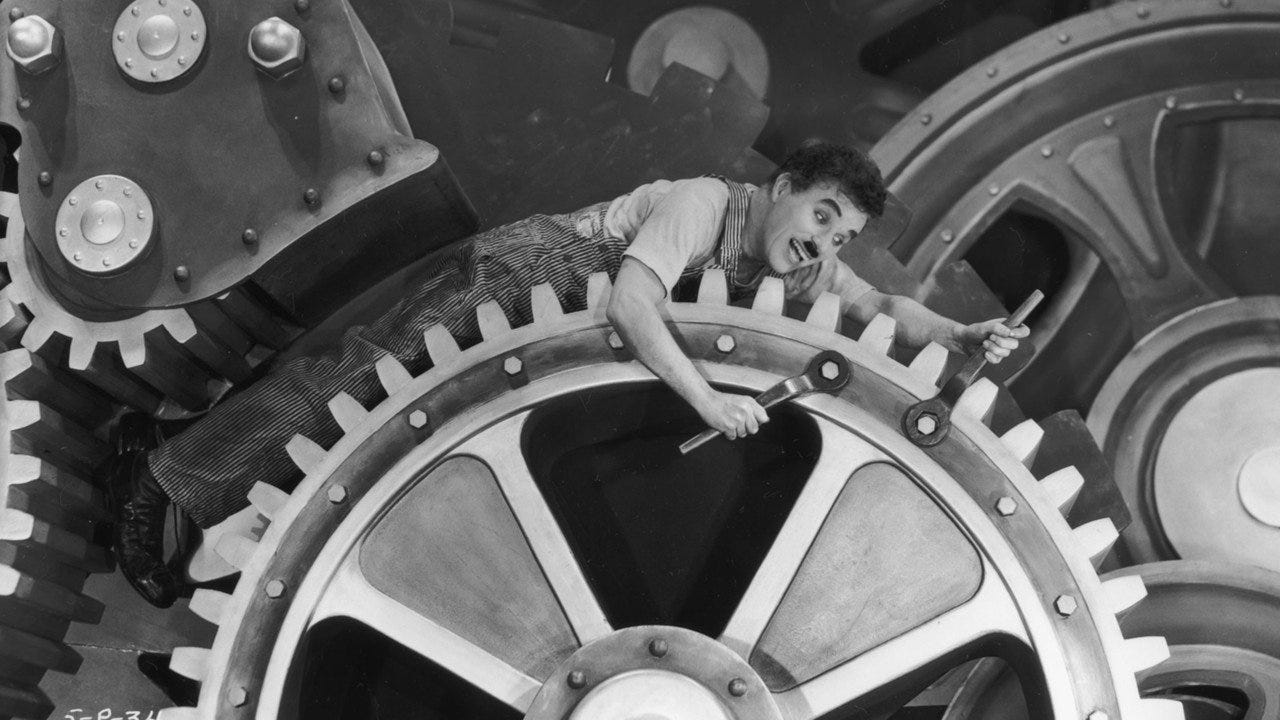
Both Pope Benedict XVI and Pope Francis criticize “the Technocratic Paradigm.” In Laudato Si’, Pope Francis opens a section on the “Human Roots of the Ecological Crisis” by discussing the dominance of this paradigm in our thinking about progress and our place in the natural order. He notes that we often use technology unreflectively and unwisely — but this is not the biggest problem:
The basic problem goes even deeper: it is the way that humanity has taken up technology and its development according to an undifferentiated and one-dimensional paradigm. This paradigm exalts the concept of a subject who, using logical and rational procedures, progressively approaches and gains control over an external object. This subject makes every effort to establish the scientific and experimental method, which in itself is already a technique of possession, mastery and transformation. It is as if the subject were to find itself in the presence of something formless, completely open to manipulation. Men and women have constantly intervened in nature, but for a long time this meant being in tune with and respecting the possibilities offered by the things themselves. It was a matter of receiving what nature itself allowed, as if from its own hand. Now, by contrast, we are the ones to lay our hands on things, attempting to extract everything possible from them while frequently ignoring or forgetting the reality in front of us (para. 106).
Pope Benedict , in Caritas in Veritate, criticizes the overreliance on technology as a mode of economic development:
Technological development can give rise to the idea that technology is self-sufficient when too much attention is given to the “how” questions, and not enough to the many “why” questions underlying human activity. For this reason technology can appear ambivalent. Produced through human creativity as a tool of personal freedom, technology can be understood as a manifestation of absolute freedom, the freedom that seeks to prescind from the limits inherent in things. The process of globalization could replace ideologies with technology, allowing the latter to become an ideological power that threatens to confine us within an a priori that holds us back from encountering being and truth. Were that to happen, we would all know, evaluate and make decisions about our life situations from within a technocratic cultural perspective to which we would belong structurally, without ever being able to discover a meaning that is not of our own making. The “technical” worldview that follows from this vision is now so dominant that truth has come to be seen as coinciding with the possible. But when the sole criterion of truth is efficiency and utility, development is automatically denied (para. 70).
Neither Pope is a critic of technology itself; each praises the improvements in human well-being that technological innovation has made possible. Instead, they critique the adoption of technology and technological methods as a worldview (a paradigm) cut off from moral reflection. When we relate to the natural order solely through technology, or think that technological progress will automatically bring about human progress, technology transforms from a powerful tool to a reductionist way of thinking about the world and our place in it.
When I first read these encyclicals, I found the Popes’ insights plausible and compelling. At the same time, I was surprised. I found two distinct technocratic paradigms in their writings: one expected, and one unexpected. The expected “Technocratic Paradigm” was the adoption of technological progress as a sufficient guide for development. This paradigm is clearly described in the quotations above. I did not expect the second “Technological Paradigm”: a reliance on free economic competition to bring about order and prosperity in society. The Popes argue that these two paradigms are so closely related that they belong under the same umbrella. I understand the criticisms that are common to the two paradigms, although the argument that they are part of the same paradigm seems to me a bit of a stretch. One need not imply the other.
My surprise went beyond the unexpected inclusion of the economic theory of market order in the technocratic paradigm. I was also surprised by what the Popes left out. When I hear the word technocratic, I think of technical social science and public policy as a model of policy formulation and implementation – government by experts. In this technocratic paradigm, society and economy are a system whose laws and structure can be understood and successfully manipulated. The abstractions and assumptions of social science models influence the way both governments and citizens think of the human person and his or her life in society. Papal writings (especially those of Paul VI, Benedict XVI, and John Paul II) have addressed the potential distortions of the social sciences when these sciences ignore the full truth about the human person.
I am writing a paper about these technocracies for two upcoming conferences. I plan to work out some of my thoughts over the next three posts on “One Catholic Economist.” I suspect that all three have common roots in the modern separation of positive science and moral and religious reflection, and that the criticisms of the two included paradigms apply equally to the third.
I will begin with technology in the next post. Following that, I will review why Francis and Benedict include free market theories under the same technocratic umbrella with technology, subject to the same criticisms. In a final post I will argue that the paradigm of government by technical social science belongs with the other two paradigms. It is subject to the same criticisms, and (like technology and markets) can contribute most powerfully to human well-being only when it acknowledges a more comprehensive view of the human person and of society.